
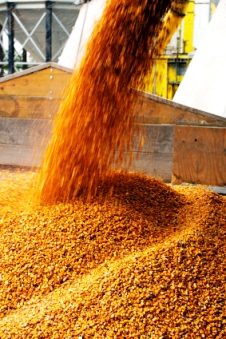
 Steeped grains enhance the flavor and color of home brewed beer. Award winning extract beers all use some kind of steeped grains. Steeped grains add body, color, and fresh flavor to your homebrewed beer.
In our earlier series on beginner brewing, we covered the basic process for making extract beer at home. This week we’ll take a look at brewing extract beer with steeped grains. Steeped grains add authentic flavor, body and color to your beer.
Steeping grains is a remarkably simple method. The grains are added to 1.5 or 2 gallons of plain water before the extracts are added. Heat the water to between 150 and 170 degrees F, and then add the grains. The grains should be crushed to expose the sugars within the grain. It is usually best to put the grains in a grain bag to make them easy to remove, however you can remove the grains by running the hot mixture through a strainer if necessary.
The grain bag will float at the top of the mixture. Leave it in and attempt to hold a constant temperature for 20-30 minutes. If you leave it in too long or steep at temperatures above 170F you will extract excessive tannins which will result in a dry astringent flavor in the finished beer.
Steeped grains will not add many fermentables to your beer (i.e. your original gravity will not increase much). Steeping grains, unlike mashing, does not convert the complex starches in the sugar into fermentable sugars, so only a small percentage of the steeped grain (< 10%) will ferment. However, since unfermentable proteins are added by steeping, the body of the beer will be increased.
Whenever possible, use freshly ground grains as crushed grains will slowly oxidize over time. If you leave your crushed grain exposed to air for more than a few weeks you may add off flavors to your beer. Storing your crushed grains in an airtight package in a refrigerator or freezer will help them to last longer, as hot temperature and moisture spoils the crushed grain more quickly.
Specialty grains are usually used for steeping. Caramel malt is often used to add body and color. Darker malts such as chocolate and black patent are also commonly used primarily for flavor and color. Other popular additions include carafoam and carapils for body and roasted barley for a deep coffee flavor.
Not all grains are appropriate for steeping however. Pale malt, for example, adds very little flavor and should be mashed. Flaked and torrified ingredients such as flaked barley, wheats, munich malt and oats also need to be mashed. To get a complete list of grains that may be mashed, visit our grain listing. Grains marked as “Must mash” should, in general, be mashed and not steeped.
Steeping these “must mash” ingredients will rarely produce the desired flavor or body and in some cases may generate off-flavors. In order to properly use these ingredients, you need to switch to a partial mash or all-grain brewing method that will mash the ingredients to take full advantage of them.
To add freshness and complexity to your extract beer, try steeping some freshly crushed grains in your next batch of all extract beer. Thanks again for joining us on the BeerSmith Home Brewing Blog. If you enjoyed this article, consider subscribing for regular email or RSS delivery.


















I always adjusted the PH of the water used to seep the grains to a PH of 5.2. Anthing higher may extract unwanted tannins and other off flavors from the grain. Do you think it is appropriate to do this?
Unless you are mashing, the pH is less important. It becomes very important for mash conversion, but when brewing extracts that use steeped grains, the pH does not matter much since you are not really converting sugars, but only creating a type of tea to capture color/flavor.
I’d heard that pH is an important factor in phenolic/tannin extraction — that you don’t want to let your mash pH get too high, or you will start to draw tannins and other phenolics out of your grains.
I assume the same would be true of grain steeping, so I always add my extract before steeping (to keep the pH low, and avoid excessive tannin extraction).
This is just what I’ve read and heard, I haven’t done side-by-side comparisons. Anyone with more legitimate chemistry background care to comment?
Ryan,
I believe the fear of tannins/phenolics occurs primarily when mashing and not steeping. Mashing requires a balanced pH (if you do a search you will find an article on this) of around 5.2. However since you are not extracting sugars from steeped grains this is less of a concern when steeping. That being said, obviously if you select grains that are high in tannins/proteins some of them will be extracted into the beer via steeping. However the pH is a much less important factor in this process than with mashing.
Pingback: Mr Beer - Read all about it and ask questions - Page 202 - Home Brew Forums
44. whoah this blog is fantastic i love reading your articles. Keep up the great work! You know, many people are searching around for this information, you can aid them greatly.
OK…but how are steeping grains entered in the software…as grains or extract?
Im obliged for the blog.Much thanks again. Really Cool.
Pingback: I didn't crush my specialty grains enough before steeping. - Home Brew Forums
Pingback: Brewing the Space Port(er) – Mission Phase 1 | Words About Stuff
Is this recipe for a 5 gallon recipe?
Pingback: numbers | alchemyoverlord
why do i need to steep the specialty grain , can i just mashed it up and add it to the liquid? tnx
You can mash it if you have the equipment and knowledge, but that would require some pale malt to provide enzymes for the mash. That technique would be called “partial mash” brewing.
I am apparently in a twilight zone between extract and partial mash brewing. Yesterday I made a 5 gal extract batch with steeping grains consisting of 1 lb of white wheat malt, 12 oz Caramel 60L, and 4 oz Breiss Extra Special, steeped 27 min at 150-155*. The estimated OG with type “extract” was 1.053. My measured OG was 1.065.
I am trying to figure out why I was so far off. When I switch the type to “partial mash”, I get an estimated OG of 1.064. Was the closeness of partial mash estimated OG and actual OG a coincidence?
Thanks for considering my question.