
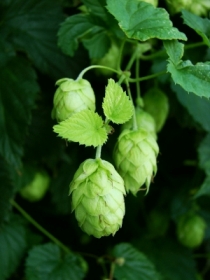
 With the ongoing hops shortage, home brewers are turning in record numbers to growing hops for beer at home. Growing hops is an fun way to expand your hop personal hop supply. There is great pride of enjoying a beer brewed with hops you grew at home.
Whether you live in the Northwest, Northeast, Midwest, South or California does not matter – hops can be grown in any moderate climate with proper care. Hops grow from small root-like cuttings about a foot long called rhizomes.
Rhizomes can be purchased from a variety of places online and mailed to your home – just do a quick search for “hop rhizomes” on google.
Location for Growing Hops
Select an area with plenty of sun. Hops need at least 6-8 hours of sun a day, so the South facing side of your home or an exposed site is a good location. Hop vines (called bines) can grow to over 25 feet and weigh over 20 pounds, so vertical space for a trellis is important as well.
Hops prefer well-aerated soil that is rich in nutrients and has good drainage. If you are going to plant several varieties, keep them well separated in your garden. Hop roots will spread quickly and take over the garden unless you separate them and trim the roots each season.
Hop Planting and Care
Hops should be planted in the Spring, late enough to avoid a frost. Fertilize liberally before planting. Plant your hops in a mound and aerate the ground by turning it over several times to aid drainage, enhance growth and prevent disease. Place the rhizomes about 4 inches deep, and make your mound of soil about a foot high to aid drainage. Place the root side of the rhizome down. Cover the mound with some straw or light mulch to inhibit the weeds.
The hop bines grow vertically and require some kind of trellis. Your trellis could some heavy rope or twine going from ground level to your roof, or a few poles securely mounted in the ground. If using rope, select rough twine-like rope so the bines can grab onto it. Keep in mind that the hop bines can be 25+ feet long and weigh 20+ pounds. The trellis should be strong and secure.
Hops also enjoy lots of water and sunlight. In the dry climates or the heat of summer, they may need to be watered daily. Once the hops begins to grow, select the best bines and wrap them around your trellis to train them. You will need to train the hops for a few days, but eventually they will begin growing in a clockwise direction from east to west around your trellis. Train the best shoots and trim the rest off.
Harvesting and Drying your Hops
Your hops will continue to grow throughout the summer, and will be ready to harvest by late summer. The harvest in the first year may not be huge, and in fact it could be very small – hops don’t reach peak yield in the first year.
To determine when to harvest, you need to examine the cones. Mature hop cones will be dry to the touch, springy, have a very strong aromatic hop odor, and leave yellow lupulin powder on your fingers. Check the cones every day or two, and when you think they are ripe, pick one and open it. It should be filled with thick yellow-gold lupulin powder if it is fully ripened.
The hops may not all ripen at once, but you need to harvest each as it ripens. Dry the hops out in a warm dry spot in your house, and keep them away from sunlight. Sunlight can seriously damage picked hops. A paper bag is a good place to store them while drying. The hops should dry out in a week or two. After that, place them in a sealed bag and store the hop cones in your freezer. Remove as much oxygen as possible from the bag to avoid oxidization.
Maintenance of Your Hops
Cut the bines back to 3 feet or so after harvesting. The winter frost will kill off the bines, after which you can cut them back further and cover them until Spring. When Spring comes, take a spade and cut around the rhizome to trim the roots back to about a foot. Trimming the roots will prevent the hops from consuming your entire garden, as they tend to spread rapidly. Add some fertilizer, fresh mulch and a new trellis and you will be ready to grow hops for a fresh new season.
If you want to read more about growing hops, Beer Bits has put together a page of related links.
A properly cared-for hops garden will keep you in fresh hops for years to come.
Note: Hops can be dangerous for dogs to consume so please don’t feed your pets hops.
Thanks again for joining us, and if you have enjoyed this article, please subscribe to our Home Brewing blog or drop a guest vote on BrewPoll using the vote button on the right.
Reference
- BYO Magazine: “Hop Growing”, March-April 2008, Vol 12, No 2


Hello,
i am Mayur, i am from Nasik, India.
i just came ascoss this website and found it interesting.
i have my own land with ample/continuous water supply.
PLease some one guide me the planting procedure and maintenence of hops, and how many times can harvest the hop in a year.
Just planted rooted rhizome with aboutt 3 feet of vine from 1 gal. Bucket into raised bed. The tip of the vine got broken. Will it continue to grow?
Pingback: Planting My Hops | Ensemble ZKG
First planted a gift of six hops, three Willamette , three Nugget hops. Planted 3-31-13. First year thought I’d lost them. But they came back this spring, but are not thriving. I didn’t know about planting them in great soil in a hill, so mine are at ground level.
Should I actually dig up the rhizomes this fall or next spring and build up the one foot mounds recommended above? I will if needed. I need a lot more plants so far, they aren’t thriving.
Have 5 acres. I Ike to grow hops. Any info about starting this Process I would appreciate. I can pay for information.
I live on a Caribbean island,any suggestions whether I can grow hops here or not?any advice greatly appreciated
any info on growing hops on a Caribbean island would be greatly appreciated. want to brew beer from island hops.
Hello,
i am Kunwar saini , i am from Haridwar, uttarakhand,India.
i just came ascoss this website and found it interesting.
i have my own land with ample/continuous water supply.
PLease some one guide me the planting procedure and maintenence of hops,
I am first time in hop plant
Pingback: Using Fresh Wet Hops in Home Brewed Beer | Home Brewing Beer Blog by BeerSmith
Pingback: Grow Your own Beer Garden | Pick a pepper
please contact me with the info I requested . growing hops on my island of Dominica. that is first step to beerbrewing one a craftbeer scale. Thank you for any help that you can provide.
Hello Not sure if I can grow hops in my area as we do sometimes get frost in late May or early june . I have 33 acres and am very interested in selling hops to local brewers .
If you have any information for me it would be greatly appreciated .
Thanks Nancy
How do I maintain them in the winter season, do I cut them back in the fall? Cut them short ? I do not harvest for beer or anything like that, I like the look on my fence, and would like to start an other wall another fence? Can i transplant some?
Hi, I am very interested in growing some hops. Where can I get the seed? Hops is a Chinese medicine.
I’m looking at building microbreweries in Haiti and Cuba. Can I grow hops on these two islands. Sissel, grains and sugarcane griw here. 2 to 3 crops a year. Please advise as I’d like to get these farmers growing a crop like hops that is very much needed for the craft beer sectirs in the USA and Caribbean
can I ACCESS THE SEED OF HOPS
hi ,
I am an engineering grad who is looking forward to invest on agriculture always, iam from chennai , tamil nadu , india
this hops seem to be very interesting factor, so kindly let me know where can i get the guide and rhizome.
Appreciate the work towards agriculture.
kudos!!!
Akil
[email protected]
9840095795
Pingback: How the Jctavezzeolrna Saved My Garden! – Beer, Backpack and Business
Pingback: Utilizing Contemporary Moist Hops in Dwelling Brewed Beer ~ Double W
Pingback: How are Hops Grown? – Craft Sense
I planted two hops rhizomes in the Spring. They grew, but never produced any hops. I followed instructions — should I perhaps fertilize them? I’ll cut them down after frost and hope they flower next year. Would appreciate other sugestions.
Pingback: We’ve Got Some Really Bad News About Space Beer - MEL Magazine
Pingback: We’ve Got Some Really Bad News About Space Beer - Dollar Shave Club Original Content
Hello..
So where i can download XEvil program??
Can’t find any URL.
Thank you!
[email protected]